Poetry logo

Poem of the day

Categories

Poetry Hubs

Simple Poetry's mission is to bring the beauty of poetry to everyone, creating a platform where poets can thrive.

Copyright Simple Poetry © 2026 • All Rights Reserved • Made with ♥ by Baptiste Faure.

Shortcuts

  • Poem of the day
  • Categories
  • Search Poetry
  • Contact

Ressources

  • Request a Poem
  • Submit a Poem
  • Help Center (FAQ)
  • Privacy Policy
  • Terms of Service
Browse poems by categories

Poems about Love

Poems about Life

Poems about Nature

Poems about Death

Poems about Friendship

Poems about Inspirational

Poems about Heartbreak

Poems about Sadness

Poems about Family

Poems about Hope

Poems about Happiness

Poems about Loss

Poems about War

Poems about Dreams

Poems about Spirituality

Poems about Courage

Poems about Freedom

Poems about Identity

Poems about Betrayal

Poems about Loneliness

Poetry around the world

Barcelona Poetry Events

Berlin Poetry Events

Buenos Aires Poetry Events

Cape Town Poetry Events

Dublin Poetry Events

Edinburgh Poetry Events

Istanbul Poetry Events

London Poetry Events

Melbourne Poetry Events

Mexico City Poetry Events

Mumbai Poetry Events

New York City Poetry Events

Paris Poetry Events

Prague Poetry Events

Rome Poetry Events

San Francisco Poetry Events

Sydney Poetry Events

Tokyo Poetry Events

Toronto Poetry Events

Vancouver Poetry Events

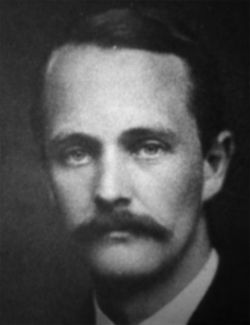
Frank Sidgwick

Frank Sidgwick was an English writer, publisher, and scholarly editor. He was instrumental in popularizing ballad and folklore studies in the early 20th century. Sidgwick co-founded the publishing company Sidgwick & Jackson, which became known for its contributions to literature and scholarship. Though not primarily known as a poet, his editorial and publishing efforts significantly impacted the literary culture of his time, emphasizing the academic study of traditional songs and verses.

July 8, 1879

January 14, 1939

English

Frank Sidgwick

Page 8 of 8

Previous

Next

Page 8 of 8

Willie's Fatal Visit

The Text is taken from Buchan's Ballads of the North of Scotland. It consists largely of familiar fragments. Stanzas 9-11 can be found in The Grey Cock.


The Story is a trivial piece in Buchan's usual style; but the smiling ghost, which is female (17.1), is a delightful novelty. She assumes the position of guardian of Willie's morals, then tears him in pieces, and hangs a piece on every seat in the church, and his head over Meggie's pew!


WILLIE'S FATAL VISIT

1.
'Twas on an evening fair I went to take the air,
I heard a maid making her moan;
Said, 'Saw ye my father? Or saw ye my mother?
Or saw ye my brother John?
Or saw ye the lad that I love best,
And his name it is Sweet William?'

2.
'I s...

Frank Sidgwick

Willie's Lady

The Text is from the lost Fraser-Tytler-Brown MS., this ballad luckily having been transcribed before the MS. disappeared. Mrs. Brown recited another and a fuller version to Jamieson.


The Story.--Willie's mother, a witch, displeased at her son's choice, maliciously arrests by witchcraft the birth of Willie's son. Willie's travailing wife sends him again and again to bribe the witch, who refuses cup, steed, and girdle. Here our version makes such abrupt transitions, that it will be well to explain what takes place. The Belly Blind or Billie Blin (see Young Bekie, First Series, pp. 6, 7) advises Willie to make a sham baby of wax, and invite his witch-mother to the christening. Willie does so (in stanzas lost between our 33 and 34); the witch, believing the wax-baby to be flesh and blood, betrays all her craft by aski...

Frank Sidgwick

Young Akin

The Text is taken from Buchan's Ballads of the North of Scotland, and, like nearly all Buchan's versions, exhibits traces of vulgar remoulding. This ballad in particular has lost much of the original features. Kinloch called his version Hynde Etin, Allingham his compilation Etin the Forester.


The Story is given in a far finer style in romantic Scandinavian ballads. Prior translated two of them, The Maid and the Dwarf-King, and Agnes and the Merman, both Danish. The Norse ballads on this subject, which may still be heard sung, are exceptionally beautiful. Child says, 'They should make an Englishman's heart wring for his loss.'

In the present version we may with some confidence attribute to Buchan the stanzas from 48 to the end, as well as 15 and 16. The preference is given to B...

Frank Sidgwick

Young Bekie

The Text is that of the Jamieson-Brown MS., taken down from the recitation of Mrs. Brown about 1783. In printing the ballad, Jamieson collated with the above two other Scottish copies, one in MS., another a stall-copy, a third from recitation in the north of England, a fourth 'picked off an old wall in Piccadilly' by the editor.

The Story has several variations of detail in the numerous versions known (Young Bicham, Brechin, Bekie, Beachen, Beichan, Bichen, Lord Beichan, Lord Bateman, Young Bondwell, etc.), but the text here given is one of the most complete and vivid, and contains besides one feature (the 'Belly Blin') lost in all other versions but one.

A similar story is current in the ballad-literature of Scandinavia, Spain, and Italy; but the English tale has undoubtedly been affected by the charming legend of G...

Frank Sidgwick

Young Benjie

The Text is given from Scott's Minstrelsy (1803). He remarks, 'The ballad is given from tradition.' No. 29 in the Abbotsford MS., 'Scotch Ballads, Materials for Border Minstrelsy,' is Young Benjie (or Boonjie as there written) in thirteen stanzas, headed 'From Jean Scott,' and written in William Laidlaw's hand. All of this except the first stanza is transferred, with or without changes, to Scott's ballad, which is nearly twice as long.


The Story of this ballad, simple in itself, introduces to us the elaborate question of the 'lyke-wake,' or the practice of watching through the night by the side of a corpse. More about this will be found under The Lyke-Wake Dirge, and in the Appendix at the end of this volume. Here it will suffice to quote Sir Walter Scott's introduction:--

'In this ballad t...

Frank Sidgwick

Young Hunting

The Text is given from two copies in Herd's MSS. as collated by Child, with the exception of two lines, 9.3,4, which are taken from a third and shorter copy in Herd's MSS., printed by him in the Scottish Songs. Scott's ballad, Earl Richard, is described by him as made up from the above-mentioned copies of Herd, with some trivial alterations adopted from tradition--a totally inadequate account of wholesale alterations. Scott also gives a similar ballad in Lord William.


The Story.--Young Hunting, a king's son, tells a former mistress that he has a new sweetheart whom he loves thrice as well. The lady conceals her anger, plies him with wine, and slays him in his drunken sleep. Her deed unluckily is overseen by a bonny bird, whom she attempts to coax into captivity, but fails. She dresses Young Hunting fo...

Frank Sidgwick

Young Waters

The Text is that of a copy mentioned by Percy, 'printed not long since at Glasgow, in one sheet 8vo. The world was indebted for its publication to the lady Jean Hume, sister to the Earle of Hume, who died lately at Gibraltar.' The original edition, discovered by Mr. Macmath after Professor Child's version (from the Reliques) was in print, is:-- 'Young Waters, an Ancient Scottish Poem, never before printed. Glasgow, printed and sold by Robert and Andrew Foulis, 1755.' This was also known to Maidment. Hardly a word differs from Percy's version; but here I have substituted the spellings 'wh' for Percy's 'quh,' in 'quhen,' etc., and 'y' for his 'z' in 'zoung, zou,' etc.

The Story has had historical foundations suggested for it by Percy and Chambers. Percy identified Young Waters with the Earl of Murray, murdered, according t...

Frank Sidgwick

Page 8 of 8

Previous

Next

Page 8 of 8